


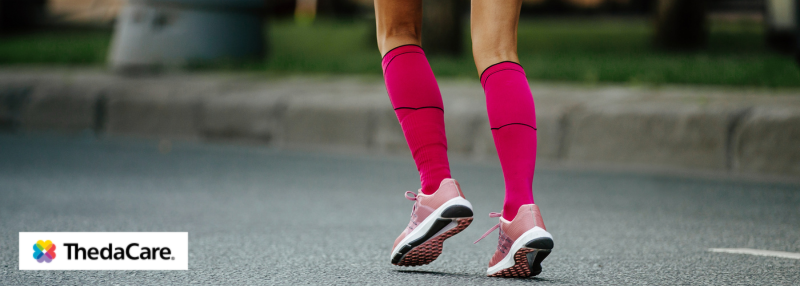
Spring in Wisconsin brings race season, long walks on the trail, yard work, and more time on your feet. Some people are training for a half marathon. Others are just trying to stay active without their legs feeling heavy by 3 p.m.
Compression socks and compression stockings can support circulation, reduce swelling, and help ease the “heavy legs” feeling, whether you’re training for a race or standing/sitting all day.
Here’s how compression works and why it’s not just for elite runners.
What Does Compression Gear Actually Do?
Compression stockings and sleeves use graduated compression, meaning they’re tightest at the ankle and gradually loosen as they move up the leg. This design helps blood move back toward the heart and reduces pooling in the lower legs.
Graduated compression can help:
- Improve circulation in leg veins
- Reduce fluid buildup (edema) and swelling in the lower legs
- Support symptoms associated with varicose veins and chronic venous insufficiency (when leg veins and valves weaken and struggle to return blood to the heart, leading to swelling, aching, heaviness, or skin changes)
Important: Not all compression is the same. Athletic compression often focuses on comfort and recovery, while medical compression is designed for specific health needs and mmHg pressure levels.
Related: How Compression Stockings Help with Leg Swelling, Tired Legs, and Everyday Movement
Why Runners and Athletes Use Compression
If you’ve watched a spring race lately, you’ve probably seen runners wearing compression socks or calf sleeves. Many athletes use them because they can:
- Help manage swelling and that “beat up legs” feeling after long events
- Provide a sense of support and comfort during longer training sessions
Compression isn’t a magic fix, but it’s a popular tool for people who want their legs to feel more supported during activity and recovery.
Compression Isn’t Just for Marathoners
You don’t have to run 26.2 miles to benefit. Compression gear can also help:
- Teachers, retail staff, and healthcare workers who are on their feet all day
- Travelers sitting for long drives or flights (especially those with risk factors—talk to a clinician first)
- Gardeners, walkers, and outdoor enthusiasts who notice swelling or heaviness after being active
- People with mild varicose vein symptoms or leg swelling who want more day-to-day comfort
If your legs feel swollen, achy, or tired by the end of the day, compression stockings may help you stay more comfortable and active.
Learn More: Full Guide to Compression Garments
Choosing the Right Compression Level (mmHg)
Compression strength is measured in mmHg (millimeters of mercury)—the same unit used for blood pressure.
Here’s a practical guide:
| Compression Level | Best For (General Guidance) |
|---|---|
|
8–15 mmHg |
Light support for minor fatigue, “tired legs,” long standing/sitting days |
|
15–20 mmHg |
Moderate support for mild swelling, long work shifts, and travel days |
|
20–30 mmHg |
Medical-grade compression often used for varicose vein symptoms or moderate swelling (commonly provider-recommended) |
|
30–40 mmHg |
Higher compression used for more advanced venous disease or lymphedema management, typically with clinician guidance |
Athletic compression products often fall in the light-to-moderate range. If you have a medical condition (like chronic venous insufficiency or lymphedema), professional guidance is important to ensure the level is safe and effective.
Athletic Compression vs. Medical Compression
There’s a difference between what you might buy at a sporting goods store and what a medical equipment provider offers.
Athletic compression typically:
- Focuses on comfort, training, and recovery
- Uses lower compression levels (often OTC ranges)
- Is designed to be worn during activity
Medical compression is often:
- Used for venous or lymphatic conditions and swelling management
- Defined by specific mmHg levels and fit requirements
- More likely to require professional measurement and, sometimes, a prescription or documentation (coverage varies)
At ThedaCare At Home Medical Equipment, we provide professional fittings to help ensure you get the correct size and compression strength for your needs.
Schedule a Compression Fitting Today
Signs Compression Gear Could Help You
You may benefit from compression therapy if:
- Your ankles swell by the end of the day
- Your legs feel heavy or tired after activity or long shifts
- You notice visible varicose veins or aching with standing
- You travel frequently or sit for long periods (ask your provider if you have risk factors)
- You want added support during training or recovery
Proper fit matters, too. A stocking that’s too loose won’t provide much benefit, and one that’s too tight can be uncomfortable.
Why Compression Garment Fit Makes a Difference
Compression garments should feel snug but not painful. They should not cause numbness, tingling, or deep indentations. If they do, your sizing or compression level may be wrong.
Professional fitting typically includes:
- Measuring ankle circumference
- Measuring calf circumference
- Choosing correct length (knee-high vs. thigh-high)
- Selecting the appropriate compression level
A well-fitted garment works more effectively and feels more comfortable throughout the day.
When to Talk to a Provider First (Safety Note)
Compression is safe for many people, but you should talk to a provider first if you have significant arterial circulation issues (PAD), serious heart failure, severe neuropathy, or open wounds/skin breakdown.
Also seek medical advice for sudden, severe, or one-sided leg swelling or pain, especially if you’re concerned about blood clots.
FAQ About Compression Gear for Activity
Do compression socks help with running?
They may help with comfort and managing swelling after long periods of activity. Many people also wear them for that “supported legs” feel during training and recovery.
What’s the difference between compression socks and compression stockings?
The terms are often used interchangeably, but “stockings” may refer to medical-grade garments with specific mmHg levels and professional fitting, while many “compression socks” are OTC or athletic-focused.
What compression level (mmHg) should I choose for leg heaviness or swelling?
Mild symptoms may do well with 8–15 or 15–20 mmHg, while 20–30 mmHg is commonly used for varicose vein symptoms or moderate swelling. A fitter can help you choose the lowest effective level.
How long should I wear compression socks?
Many people wear them during the day and remove them at night unless their clinician recommends otherwise. Wear time can vary by condition and goal (daily support vs. travel vs. recovery).
Are compression socks safe for everyone?
Most people can safely wear mild compression, but compression may be unsafe with severe PAD, significant heart failure, severe neuropathy, or certain skin/wound conditions, so definitely talk with a provider first.
Should I wear compression socks during or after exercise?
Both are common. Some people prefer wearing them during activity for support, while others wear them after for comfort and recovery.
Whether You’re Racing or Just Staying Active
Compression gear isn’t only for marathon runners. It can support circulation, reduce swelling, and help your legs feel more comfortable, whether you’re training for a race or spending the day outdoors.
If you’re curious about compression stockings or need guidance on the right level, visit ThedaCare At Home Medical Equipment. We’re here to help you move comfortably throughout every season in Wisconsin.
Compression Exercise General Men's Health
April 1, 2026 by ThedaCare At Home