


As the weather warms up in Wisconsin, many people start walking more, working in the yard, traveling, or simply spending longer days on their feet. That’s usually when leg swelling, heaviness, or aching becomes harder to ignore.
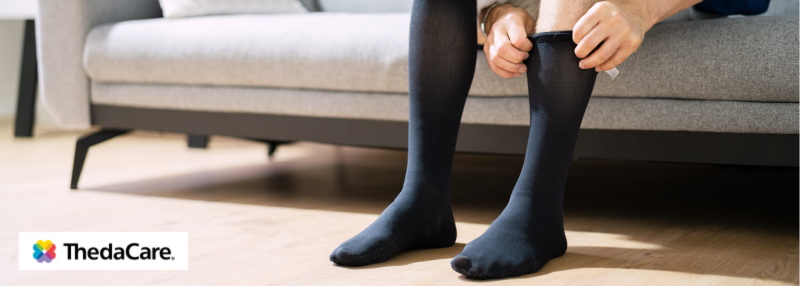
Compression stockings (also called compression socks) can help improve circulation, reduce leg swelling, and ease the “heavy legs” feeling, especially if you stand or sit for long stretches.
At ThedaCare At Home Medical Equipment, we provide professionally fitted compression garments and education to patients across Northeast Wisconsin. Here’s how compression therapy works and how it can support everyday movement.
What Do Compression Stockings Actually Do?
Compression stockings apply graduated pressure to the leg—strongest at the ankle and gradually decreasing up the leg. This design helps move blood back toward the heart and reduces blood pooling in the lower legs.
Graduated compression can help:
- Improve venous blood flow back toward the heart
- Reduce pooling that contributes to heaviness, aching, and swelling
- Support symptoms related to chronic venous insufficiency and varicose veins
They are different from regular “tight socks.” Medical compression garments are designed to provide specific pressure levels measured in mmHg (millimeters of mercury).
How Compression Stockings Can Help You Move Better
1. Reduced swelling can make walking more comfortable
Fluid buildup in the ankles and calves can make shoes feel tight and walking uncomfortable. Compression helps limit fluid pooling, which can reduce that heavy, puffy feeling.
2. Better circulation may reduce “tired legs”
By supporting blood flow, compression socks can help reduce aching and fatigue that builds up after long days standing or sitting.
3. Support for varicose veins and venous insufficiency
Compression stockings are commonly used to help manage symptoms like aching, swelling, and discomfort associated with varicose veins and chronic venous insufficiency.
4. Helpful for long days on your feet or long travel days
Travel and long periods of sitting can increase blood pooling in the legs. Public health guidance recommends movement and notes that some travelers with risk factors should talk to a clinician about compression stockings before travel.
Who Benefits Most from Compression Therapy?
Compression stockings are commonly recommended for:
- Varicose veins and chronic venous insufficiency (circulation conditions that can cause leg swelling, heaviness, and aching)
- Edema (leg swelling)
- Lymphedema (under clinician guidance)
- Post-surgical swelling (when recommended)
- Deep vein thrombosis (DVT) prevention in certain situations (medical guidance matters)
They may also help if you:
- Stand for long hours
- Sit for extended periods
- Travel frequently
- Notice leg heaviness by the end of the day
If you’re unsure whether compression is appropriate, ask your provider, especially if swelling is new, severe, or only in one leg.
Understanding Compression Levels (mmHg)
Choosing the right compression level matters, as too little may not help, and too much can be uncomfortable or inappropriate for certain conditions.
Common Compression Levels
| Compression Level | Typical Use (General Guidance) |
|---|---|
|
8–15 mmHg |
Mild support for tired, achy legs; light swelling; long sitting/standing days |
|
15–20 mmHg |
Day-to-day support for heavy legs or mild swelling; travel days; pregnancy-related leg discomfort (ask your provider) |
|
20–30 mmHg |
Often prescribed for varicose veins, moderate swelling, or venous conditions (medical-grade) |
|
30–40 mmHg |
Higher compression for more advanced venous disease or lymphedema management—typically with clinician direction |
Tip: A professional fitting helps ensure you’re using the lowest effective compression level for comfort and results.
Contact ThedaCare for a Professional Compression Fitting
Why Proper Fit Makes a Difference
A common question we hear is: “How tight should compression stockings be?”
They should feel snug and supportive, but not painful, numb, or sharply digging in. Poor fit can cause discomfort and reduce the benefit.
Proper fitting typically includes:
- Measuring ankle circumference
- Measuring calf circumference
- Choosing correct garment length
- Selecting the right compression level
At ThedaCare At Home Medical Equipment, we offer in-person fittings to help you find a comfortable, effective fit.
When to Speak with a Provider (Important Safety Note)
Compression is safe for many people, but there are situations where you should talk to a provider first, especially if you have circulation problems in the arteries (PAD), significant heart failure, severe neuropathy, or open wounds/skin issues.
Check with a provider if you have:
- Severe or sudden leg swelling
- Sudden leg pain (especially if one-sided)
- Skin changes, ulcers, or open wounds
- Known peripheral arterial disease (PAD) or significant circulation issues
- Significant heart failure or severe neuropathy
FAQ About Compression Stockings
Do compression stockings help with leg swelling?
Yes. Compression stockings can help manage leg swelling by supporting blood flow and reducing fluid pooling in the lower legs.
Do compression stockings help with tired, heavy legs from standing all day?
They can. Many people use them to reduce aching and fatigue from long periods of standing or sitting.
What compression level (mmHg) should I get?
It depends on your symptoms and diagnosis. Mild symptoms may do well with 8–15 or 15–20 mmHg, while 20–30 mmHg is commonly prescribed for varicose veins or moderate swelling. A professional fitting can help you choose the right level.
How long should I wear compression stockings each day?
Many people wear them during waking hours and remove them at night. Wearing guidance varies by condition, so follow your provider’s instructions.
Can I sleep in compression stockings?
Usually, no, as most medical compression stockings are intended for daytime use and are removed at night unless your clinician gives specific instructions (for example, certain post-surgical or hospital protocols).
How do I know if my compression stockings are too tight?
If you have numbness, tingling, pain, or deep grooves that don’t fade, or if your toes look discolored, stop wearing them and contact a provider or fitter.
Are compression stockings covered by insurance?
Coverage depends on diagnosis and plan. Some medical conditions may qualify under Medicare or private insurance with appropriate documentation.
How often should compression stockings be replaced?
Many medical compression garments lose effectiveness over time with regular wear and washing; replacement timing varies, but some guidance notes effectiveness may decline around the six-month mark with daily wear.
Support Your Circulation and Your Movement
If leg heaviness or swelling is limiting how comfortably you move, compression therapy may help. The right garment, properly fitted, can make everyday activities feel easier.
Visit ThedaCare At Home Medical Equipment to learn more about compression stockings and get professionally fitted in Northeast Wisconsin. Moving comfortably shouldn’t feel complicated.
April 1, 2026 by ThedaCare At Home